Electric Vehicles and Blockchain
From Cars to Energy Assets

Aybars Dorman
Stratège des systèmes futurs & auteur de Dorman Review
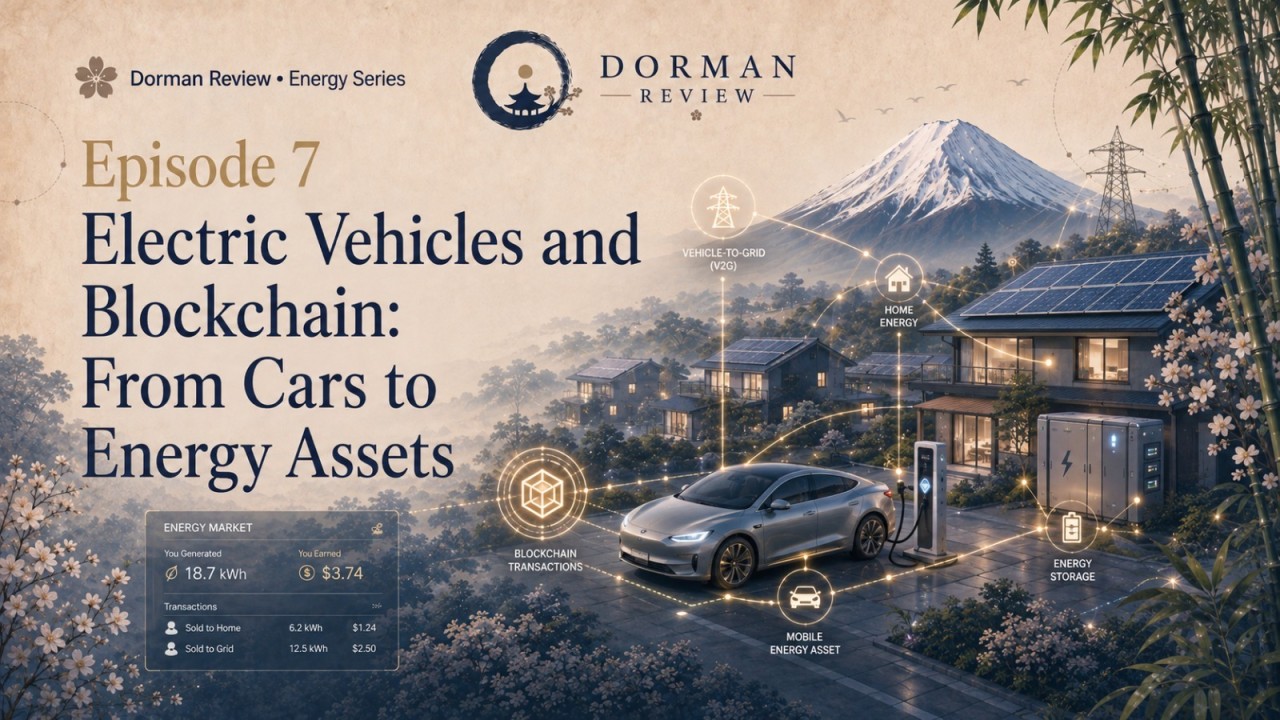
Electric Vehicles and Blockchain • From Cars to Energy Assets
Electric vehicles are usually seen as a transportation technology.
But they could also become part of the energy system.
An EV battery stores electricity. Multiply that by the more than 40 million electric vehicles already on the road worldwide, and you have a genuinely significant distributed energy resource.
This is where Vehicle-to-Grid, or V2G, becomes interesting.
Instead of only charging from the grid, compatible vehicles can send electricity back when the system needs it. The global V2G market is on pace to grow from roughly $11.9 billion in 2026 to over $54 billion by 2035, and utilities in California, Maryland and Texas are already running live programs that pay EV owners for exporting power at peak demand.
This isn't a lab experiment anymore. Maryland issued the first statewide V2G interconnection rules back in 2024. E.ON and Volkswagen are running a joint pilot targeting 10,000 vehicles across five German cities. Nissan's redesigned Leaf ships in 2026 with a bidirectional inverter built in as standard, not sold as a premium add-on. GM's Silverado EV carries a 200-kWh pack, large enough to power an average home for roughly five days.
So what actually coordinates all of this?
Blockchain and smart contracts are one candidate.
For example • Charge when electricity is cheaper.
Store the energy.
Return it to the grid automatically when demand rises.
Recommended by LinkedIn
Get paid automatically, with no manual invoicing required.
Researchers have already built and tested versions of this: peer-to-peer energy-trading schemes running on permissioned blockchains, using smart contracts to handle authentication, pricing and settlement directly between EVs and utilities, without a trusted intermediary in the middle.
The vehicle becomes more than transportation. It becomes a mobile energy asset, one that can earn money simply by sitting in a driveway, plugged in.
This model could support grid flexibility while creating new economic opportunities for EV owners. Commercial fleet operators, including school bus networks in the US, are already reported to be generating thousands of dollars a year this way.
However, the challenges are real. Bidirectional cycling adds wear to a battery that manufacturers didn't originally design for two-way use. Regulation is still catching up, state by state. And proprietary, manufacturer-specific charging systems currently make it hard to aggregate thousands of individual vehicles into one coordinated resource, the exact problem blockchain-based settlement is meant to solve.
The future of EVs may therefore be about more than replacing petrol cars.
It may be about connecting millions of mobile batteries to the energy system, and building the infrastructure, blockchain-based or otherwise, that lets them get paid for it.
Next Episode is Smart Contracts and Smart Grids • Can energy markets become autonomous?
Written by Aybars Dorman | 8 August, 2026
#ElectricVehicles #V2G #Blockchain #SmartGrid #EnergyTransition #CleanTech #Sustainability #EVCharging #DormanReview