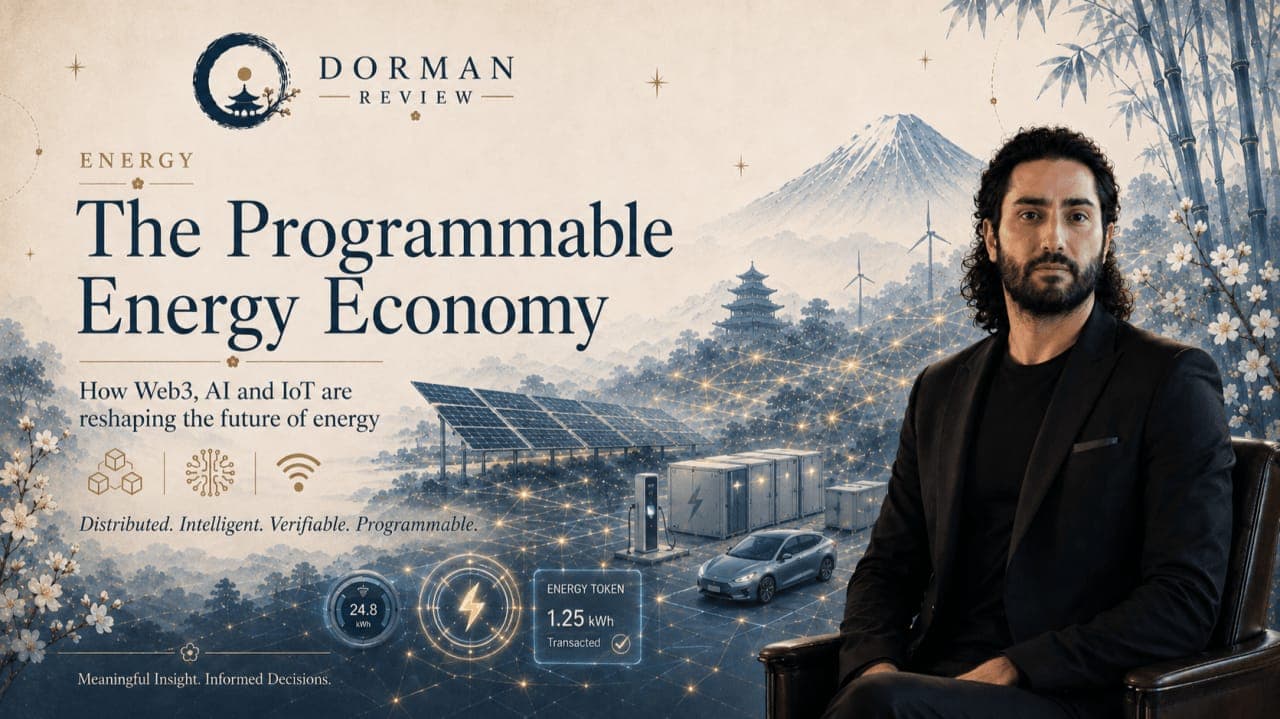
The Programmable Energy Economy
AI, Web3 and the New Grid

Aybars Dorman
Stratege für Zukunftssysteme & Autor des Dorman Review
The conversation is no longer only about how electricity is generated. It is increasingly about how energy is measured, verified, priced, exchanged, and coordinated across a more distributed system.
Solar panels, batteries, electric vehicles, and smart meters are turning consumers into active market participants. Homes can produce power. Vehicles can store it. Batteries can respond to demand. Energy assets can increasingly transact with one another.
This creates a new question:
How do millions of devices, producers, and consumers coordinate securely and efficiently?
This is where Web3 becomes relevant.
Blockchain does not create energy. Its potential lies in creating a trusted coordination layer for distributed energy markets through digital identity, transparent records, tokenization, and smart contracts.
The opportunity extends well beyond cryptocurrency.
Peer-to-peer energy markets could allow households to trade excess renewable power locally.
DePIN models could coordinate distributed physical infrastructure, from batteries to charging networks.
Blockchain-based systems could improve the traceability of renewable energy certificates and carbon markets.
Electric vehicles could evolve from transport assets into active components of the grid through vehicle-to-grid systems.
At the same time, another force is accelerating the transition: Artificial Intelligence.
AI requires enormous quantities of electricity, yet it can also improve forecasting, optimize grids, coordinate storage, and manage increasingly complex energy systems.
The most important development may therefore come from the convergence of three technologies:
Recommended by LinkedIn
IoT measures the physical world.
AI interprets and predicts it.
Web3 provides coordination, verification, and economic settlement.
Together, they could produce something beyond the traditional smart grid:
An agentic grid.
A system in which software agents optimize energy consumption, manage batteries, select charging times, verify renewable sources, and conduct transactions within clearly defined human rules.
The future of energy may therefore be more than renewable.
It may become distributed, intelligent, verifiable, and programmable.
Over the coming Dorman Review series, we will examine the technologies, economics, and governance questions shaping this emerging energy economy.
Welcome to the programmable energy era.
. Dorman Review | Meaningful Insight. Informed Decisions.
#Energy #Web3 #AI #ArtificialIntelligence #DePIN #EnergyTransition #SmartGrid #Blockchain #FutureOfEnergy